

OpenPEMS®
Predictive Emissions Monitoring System (PEMS) for air and GHG emissions monitoring.
What is OpenPEMS®?
OpenPEMS® is a predictive emissions monitoring software (PEMS) developed for use across Canada and internationally. It was the first PEMS software approved by both Alberta Environment and the Alberta Energy Regulator. Developed by Dr. Minxing Si, OpenPEMS® is licensed by KeeWee Solutions Inc.
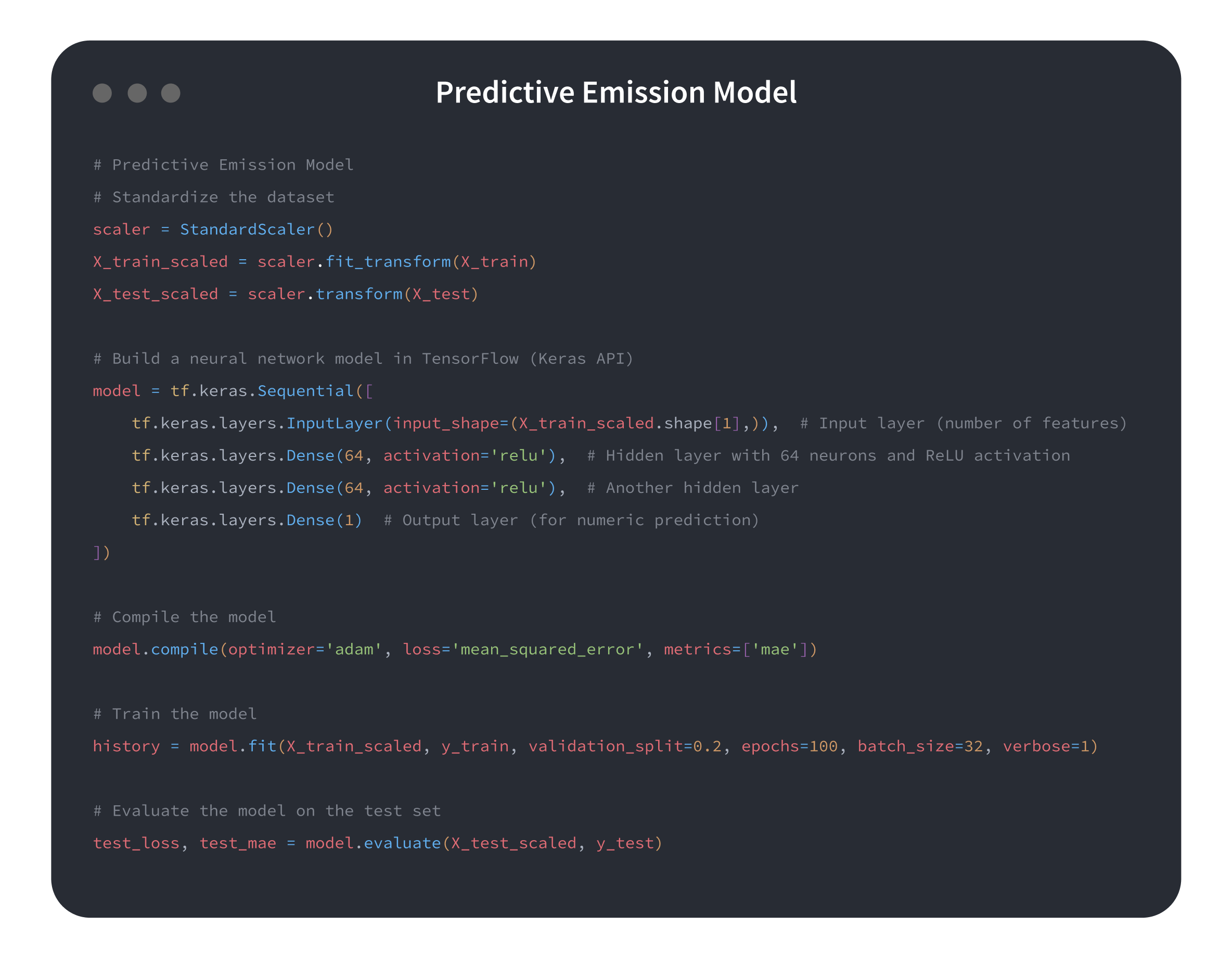
The software uses machine learning to predict air emissions such as nitrogen oxides (NOₓ) and sulfur dioxide (SO₂). OpenPEMS® is free and open-source, making Artificial Intelligence (AI) and Machine Learning (ML) technologies more accessible to a broader industrial audience, while helping reduce the costs associated with air emissions monitoring.
The method behind OpenPEMS® was published as peer-reviewed research: M. Si, T. J. Tarnoczi, B. M. Wiens and K. Du, “Development of Predictive Emissions Monitoring System Using Open Source Machine Learning Library – Keras: A Case Study on a Cogeneration Unit,” IEEE Access, vol. 7, pp. 113463–113475, 2019. doi:10.1109/ACCESS.2019.2930555
What is PEMS?
Predictive emissions monitoring software (PEMS) is a software based solution for monitoring air emissions, such as nitrogen oxide (NOx) and SO2. It uses a predictive model that analyzes data from existing facility sensors and historical operation data to predict air emissions.
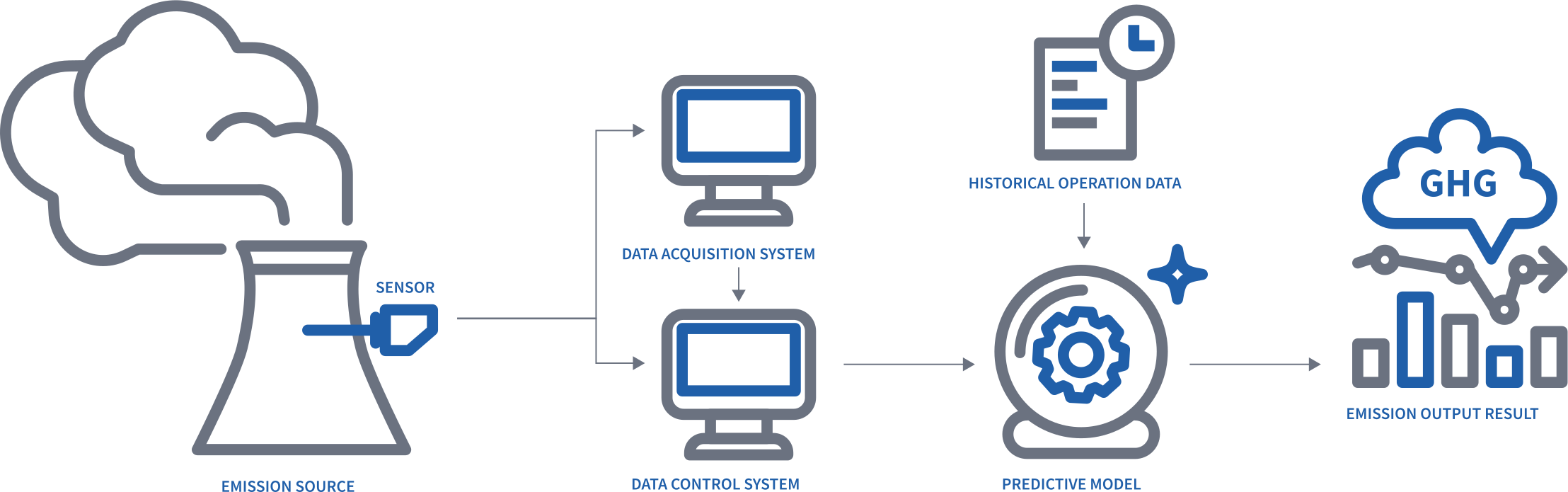
Why predictive monitoring?
Industrial facilities with large stationary combustion sources are typically required to be equipped with one or more continuous emissions monitoring systems (CEMS) to monitor NOx emissions for compliance with regulatory emission limits. Since PEMS works with existing sensors and is software based, it is far more cost effective to run - requiring far fewer resources and manpower.
PEMS are equal to CEMS in terms of accuracy and have been used across the world for more than 50 years.

Cost-effective

Software-based

Regulatory approved

Quick set up

No extra calibration needed

50+ years in use
What projects can OpenPEMS® be used for?
OpenPEMS® is suitable for use across the supply chain, from the largest combustion sources to the smallest. It can be used to measure a variety of emission types, including:
NOx
Nitrogen oxide
SO2
Sulfur dioxide
CH4
Methane
PM
Particulate matter
CO2
Carbon dioxide
H2S
Hydrogen sulfide
Why switch to OpenPEMS®?
After OpenPEMS® is trained on four months of CEMS data, it can continuously measure and predict emissions from emission sources. This means your facility will have reliable, continuous data for all emissions sources - even when they do not have a CEMS unit monitoring them.

Continuous monitoring

Works for large and small sources
No specialized equipment
PEMS vs CEMS
A predictive emissions monitoring system (PEMS) estimates emissions in software from sensors a facility already has. A continuous emissions monitoring system (CEMS) measures them with dedicated analyser hardware.
| PEMS (OpenPEMS®) | CEMS | |
|---|---|---|
| How emissions are determined | A predictive model using existing facility sensors and historical operating data | Installed analyser hardware measuring the exhaust |
| Hardware | None beyond existing sensors; no special sensors or probes long-term | Specialised analysers and sampling equipment |
| Maintenance and calibration | Existing sensors, already maintained on standard preventative schedules | The analysers themselves need ongoing maintenance and calibration |
| Regulatory status in Canada | Accepted alternative monitoring method to CEMS at federal and provincial levels | Typically required for large stationary combustion sources |
| Regulatory status in the US | Approved by the US EPA for regulatory reporting (Performance Specification 16) | Established monitoring method |
| Role | Primary monitoring method, or backup to a CEMS | Primary monitoring method |
OpenPEMS® questions
Is OpenPEMS® free?
Yes. OpenPEMS® is free, open-source predictive emissions monitoring software. It was developed by Dr. Minxing Si and is licensed by KeeWee Solutions Inc.
Is PEMS accepted by regulators?
Yes. In Canada, PEMS is an accepted alternative monitoring method to CEMS at federal and provincial levels, and OpenPEMS® was the first PEMS software approved by both Alberta Environment and the Alberta Energy Regulator. In the United States, the EPA approves PEMS for regulatory reporting under Performance Specification 16.
Which emissions can OpenPEMS® predict?
Nitrogen oxides (NOx), sulfur dioxide (SO2), methane (CH4), carbon dioxide (CO2), hydrogen sulfide (H2S) and particulate matter (PM).
How long does OpenPEMS® take to set up?
OpenPEMS® can be installed in less than six weeks. The model is trained on four months of CEMS data, after which it continuously predicts emissions from the source.
Can PEMS replace CEMS?
PEMS can serve as the primary monitoring method or as a backup to a CEMS, where the applicable regulator accepts it. Because it runs on existing sensors, it can also provide continuous data for sources that have no CEMS at all.
Trusted by ISO accredited verification body
30+ years
combined industry verification and reporting experience

